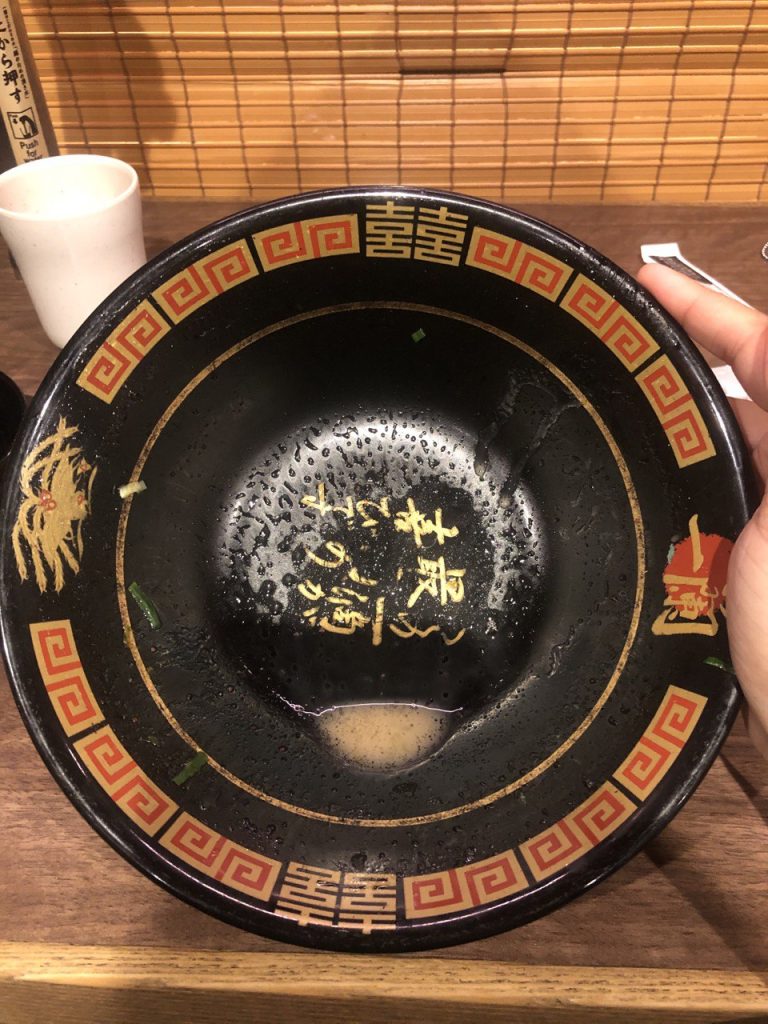
There’s something about Tokyo at midnight. After long, exhilarating days spent exploring the city with family—navigating temple grounds, browsing through tiny bookstores, or losing ourselves in the sensory overload of Akihabara—my husband and I would tuck our little one in for the night under the watchful care of his grandparents. And then, our night would begin again.
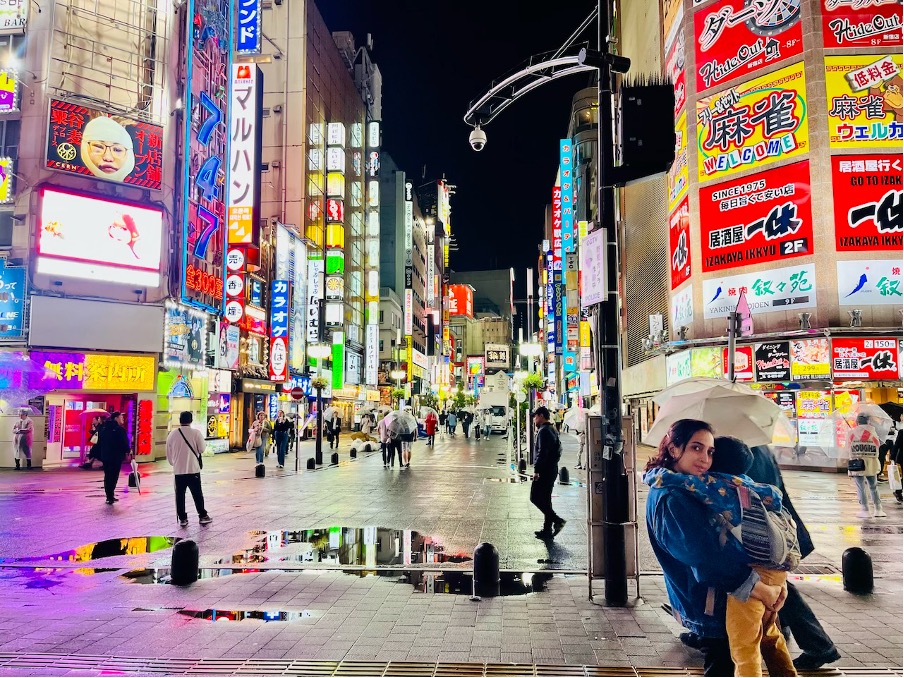
We’d step out into the neon glow of Shinjuku or Shibuya, the streets still pulsing with life. There’s a hush that falls over the city past a certain hour—not silence, but a softer buzz. We’d wander, camera in hand, capturing the incandescent billboards, the towering screens, the way the rain (if we were lucky) turned the crosswalks into mirrors of color. The roads would be lit up by the headlights of gleaming taxis, the reflections of neon signage rippling in puddles like spilled paint. And then, without planning, without fail, we would soon find ourselves near an Ichiran.
The first time we walked into one of these 24/7 ramen havens, the ordering process felt like a puzzle. We descended bright red stairs into a desolate-looking basement, which suddenly transformed into a cozy, conspiratorial little hideaway. A vending machine greeted us at the entrance, all bright buttons and unfamiliar characters. We fumbled through, pressing options, collecting our tickets, and moved on to the next step.
We’d be ushered into a dimly lit, narrow corridor where customers were seated in individual booths, separated by wooden screens—almost like study carrels—each facing a wooden panel in front. Inside, the world was even quieter. The booths were small, private, lined in warm wood. Once seated, we’d have our backs to the other customers, and the only thing we’d see was the little counter where we’d order, receive, and consume our ramen.
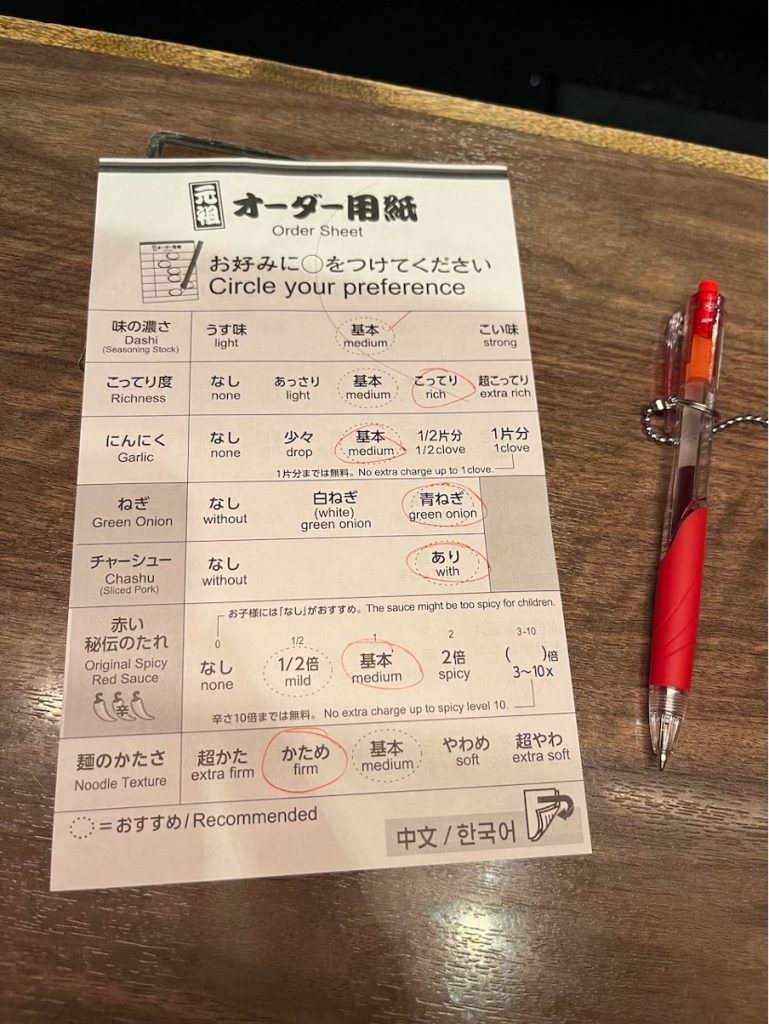
We’d place our tickets on the counter, and without a single word exchanged, the panel would lift just enough for a pair of hands to reach through, take our selections, and then slide shut again. No words, only a glimpse of the kitchen’s glow before it clicked shut once more—the quiet efficiency of a city that knows how to serve a perfect bowl of ramen at any hour.
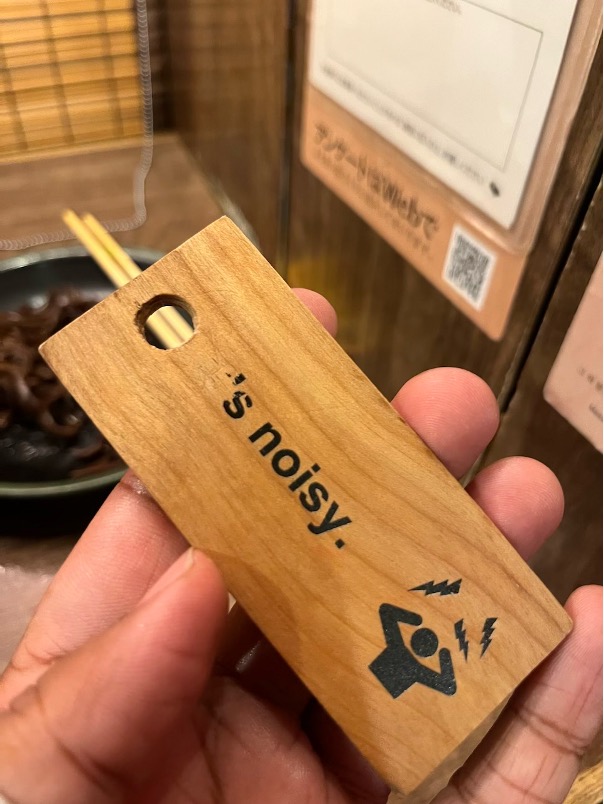
And if you needed anything? A set of small wooden tags hung neatly at the side of each booth, each inscribed with different requests—more noodles, extra broth, a reminder to call for service. One tag, in particular, caught our eye: the one to discreetly inform the staff that someone nearby was being too noisy. It was a glimpse into the unspoken etiquette of Ichiran, a place designed for singular focus, where one could be comfortable in solitude and where even complaints were handled in silence.
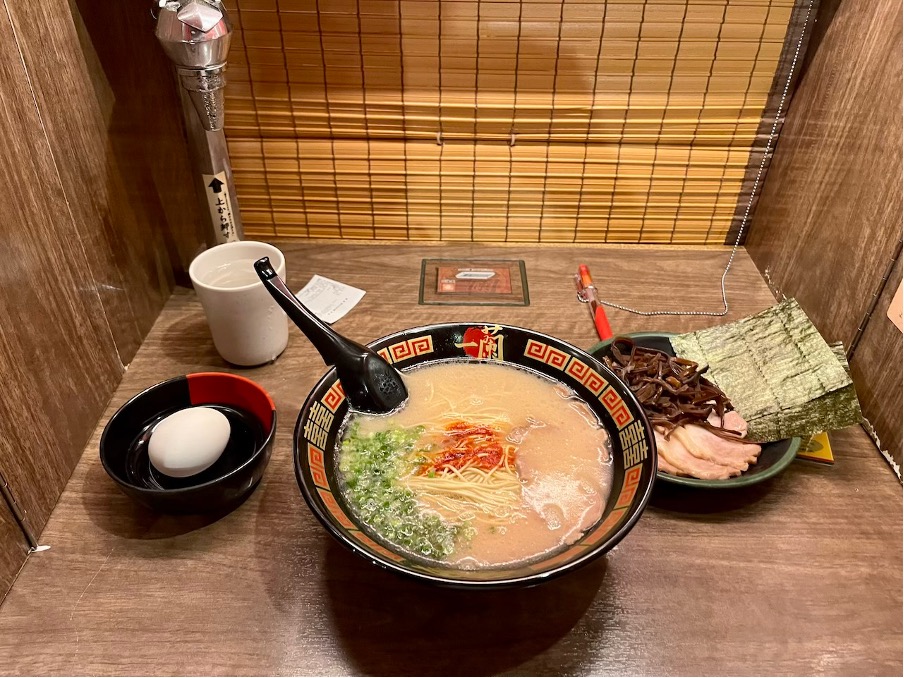
Then, finally, the ramen. The bowl, deep and lacquered, held a broth that glowed amber in the dim light. The first sip—rich, velvety, impossibly deep. The noodles, cooked to the precise texture we had chosen moments ago, soaking up every bit of flavor. The quiet indulgence of it all, interrupted only by the soft clatter of chopsticks and the occasional satisfied sigh from a fellow diner.
Say what you will about this being a chain restaurant—about it being a lowbrow or clichéd choice—but Ichiran justifies itself with each consistently excellent bowl of ramen. To me, there will always be enough room for a string of Ichirans to coexist alongside specialty ramen shops.
At that hour, the ramen was more than just a meal. It was the culmination of the day, a slow unraveling of all the moments that came before. We’d sit there, letting the warmth settle in our bones, knowing we’d do it all over again tomorrow.
By the time we stepped back into the night, the streets had emptied just a little more. The last trains rumbled in the distance, and lone revelers straggled through, their energies finally spent. The vending machines still cast their patient glow onto the sidewalks. Distant jingles still rang out in the neon night.
Some cities dazzle in the daylight. But Tokyo, I’d argue, holds its real magic in the quiet—in the glow of a ramen shop at midnight.